
The 4th Calligraphy Exhibition "Pyeolchida (Unfolding)"
Works —
- Type: Exhibition
- Date: July 23 – 29, 2025
- Location: Seoul, Korea
Aesthetics of Deficiency
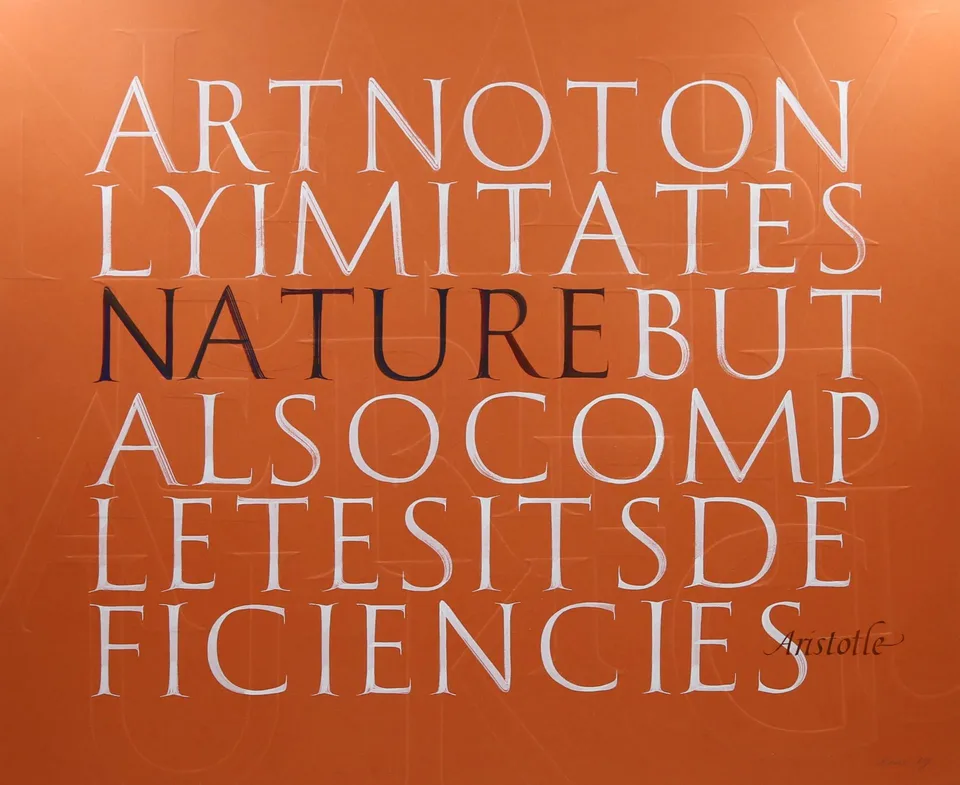
Aesthetics of Deficiency — Gouache, Colored Paper, 650 × 560 mm
“Art not only imitates nature, but also completes its deficiencies.”
Aristotle
Concept
Aristotle saw the essence of art as going beyond the imitation of nature: art supplies what nature itself lacks. Building on that insight, this work sets out to express imperfection as an artistic element of calligraphy.
Could it be that deficiency is, in fact, the very space that invites art to step in?
Visual Approach
Structural balance and rhythm
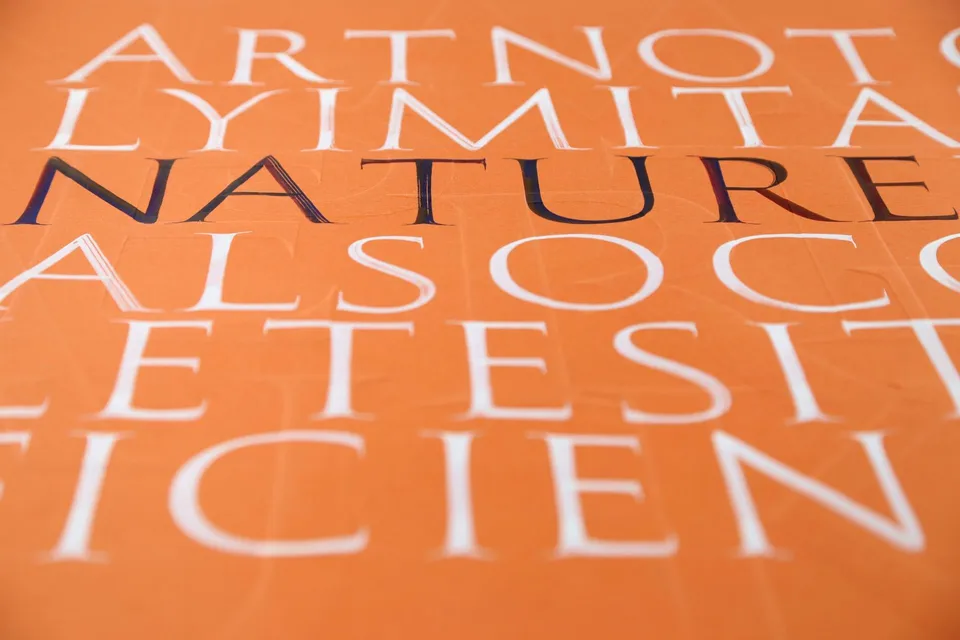
The full sentence is written in calligraphy based on classical Roman capitals, set on a square grid for a refined rhythm. Yet subtle tremors in the brushwork and variations in density reveal a deliberate imperfection.
Visual emphasis on ‘NATURE’
At the center of the sentence, the word NATURE is written with vivid, visible brush texture, symbolizing the vitality of nature, the very subject of imitation.
Omitted strokes and the use of space
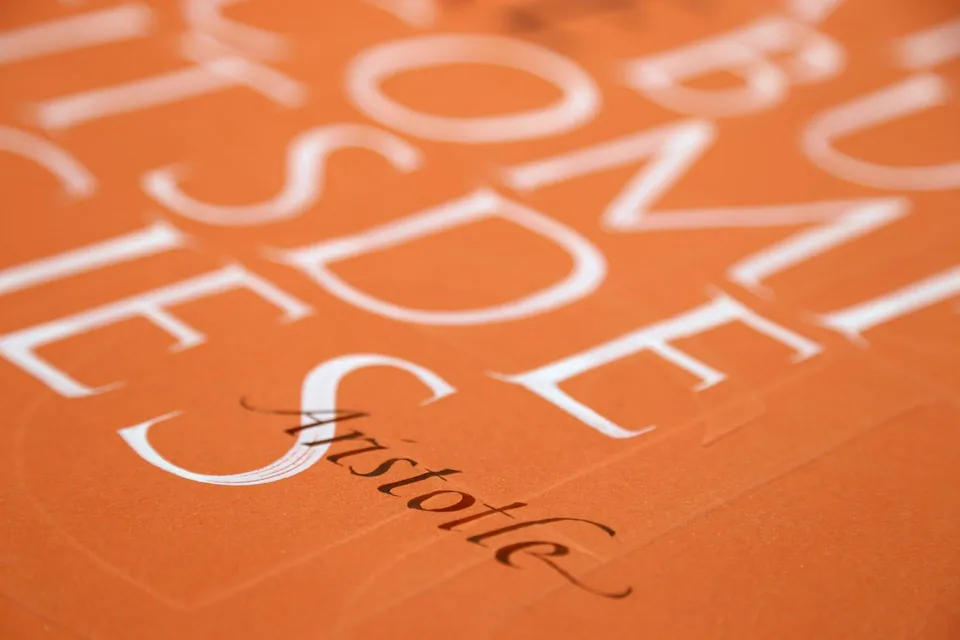
In some letters, parts of strokes are left out or softened to make ‘deficiency’ visible. These formal gaps open room for interpretation and imagination while sustaining tension across the whole work.
Placement of the signature and attribution
Aristotle’s name at the bottom is set in a delicate italic hand, grounding the work philosophically and lending it classical dignity. Differences in saturation and value also guide the eye, bringing the presence of nature to the fore.
Statement
"Aesthetics of Deficiency" is a calligraphic work that seeks completeness not by avoiding deficiency but by revealing it. Its starting point is the belief that deficiency is not something negative but can become an ‘aesthetics of the unfinished’ that makes artistic intervention possible.
Thoreau’s Garden
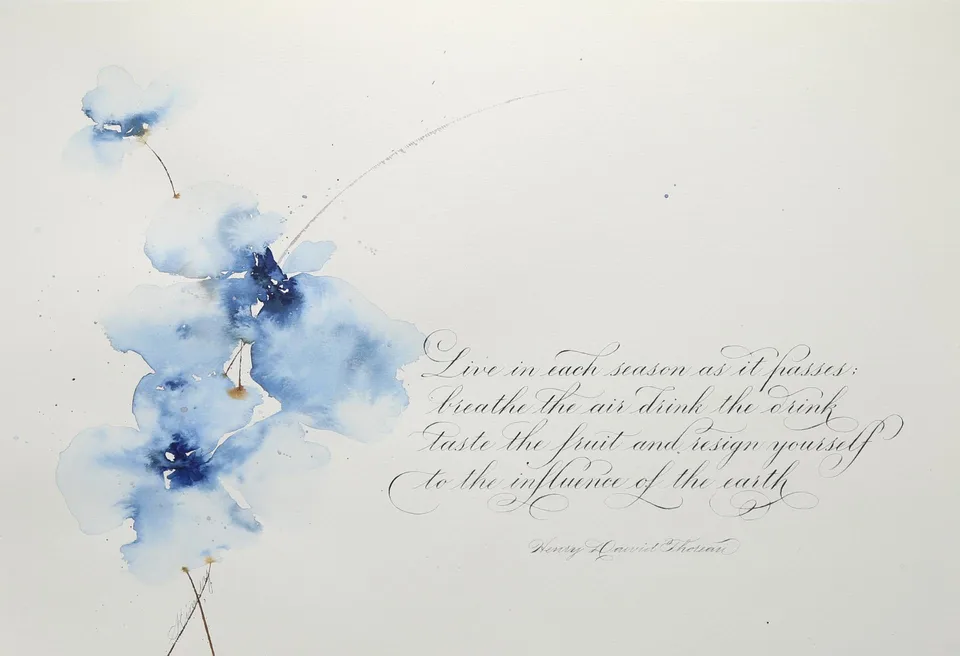
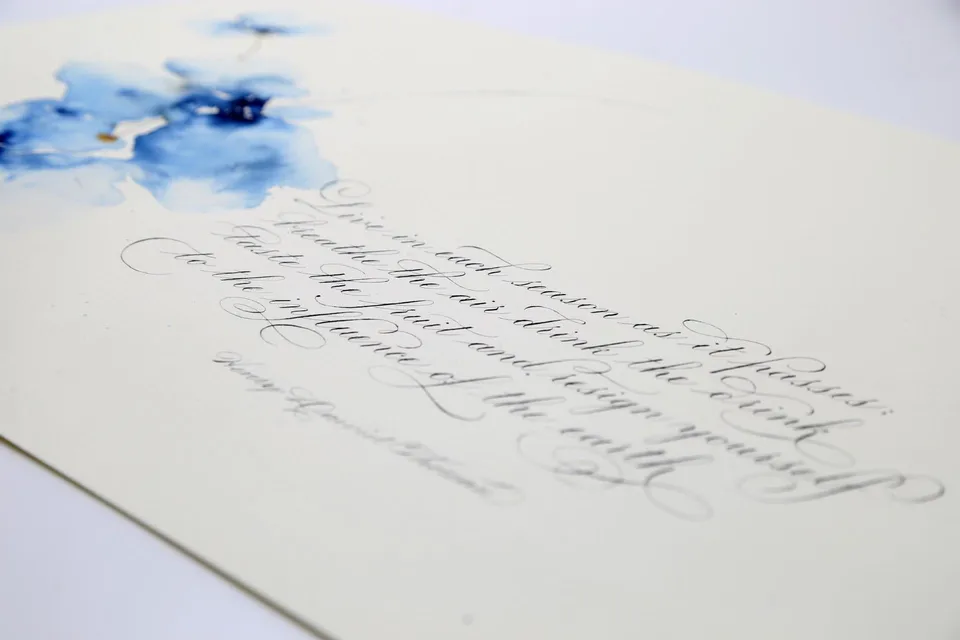
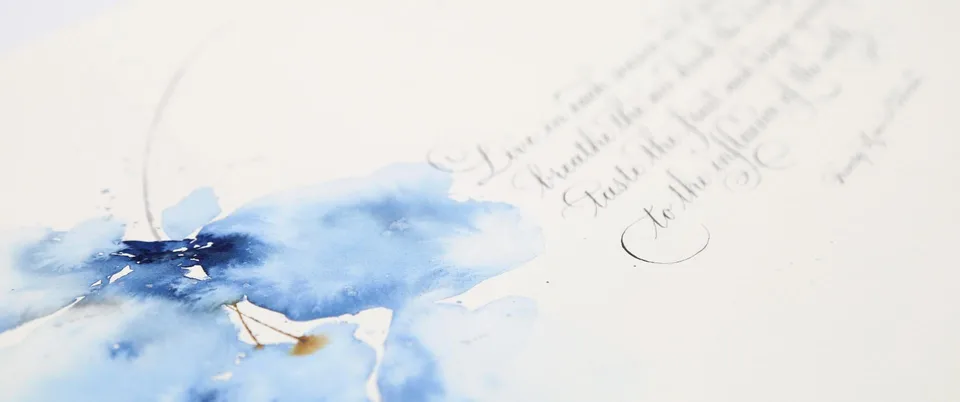
Thoreau’s Garden — Gouache & watercolour, Cold pressed paper, 690 × 560 mm
“Live in each season as it passes; breathe the air, drink the drink, taste the fruit, and resign yourself to the influence of the earth.”
Henry David Thoreau
Concept
Henry David Thoreau advocated a life lived in step with nature. These words distill that philosophy, and through them I sought to give visual form to a sense of living through each season and an attitude of entrusting oneself to nature.
Visual Approach
Watercolor floral art
The blue flowers filling the left side of the work symbolize the passing of the seasons and the feel of nature. The blooms and gradations of watercolor reveal the uncontrolled texture of nature, echoing an attitude of humbly surrendering oneself before it.
Copperplate calligraphy
The calligraphy on the right aims to capture nature’s rhythm through delicate curves and fine contrast. The flow of the curves is organic, as if joined to the flower stems, becoming both a sentence to be read and a flow of sensation.
Composition and space
The color on the left and the lettering on the right divide the picture to create visual balance, while the white space, a room to breathe, conveys nature’s "beauty of emptiness".
Statement
"Thoreau’s Garden" is a garden on paper where letters and painting, meaning and image, breathe together. Rather than simply depicting nature, it seeks to exist within it, as if seeping into it. It is not merely an artistic arrangement but a poetic declaration of the way I live.